-

Call us
-

Send Us Mail

 Head Protection
 Hand Protection
 Body Protection
 Sustainable Protection
 VendPack®
  RetailPack
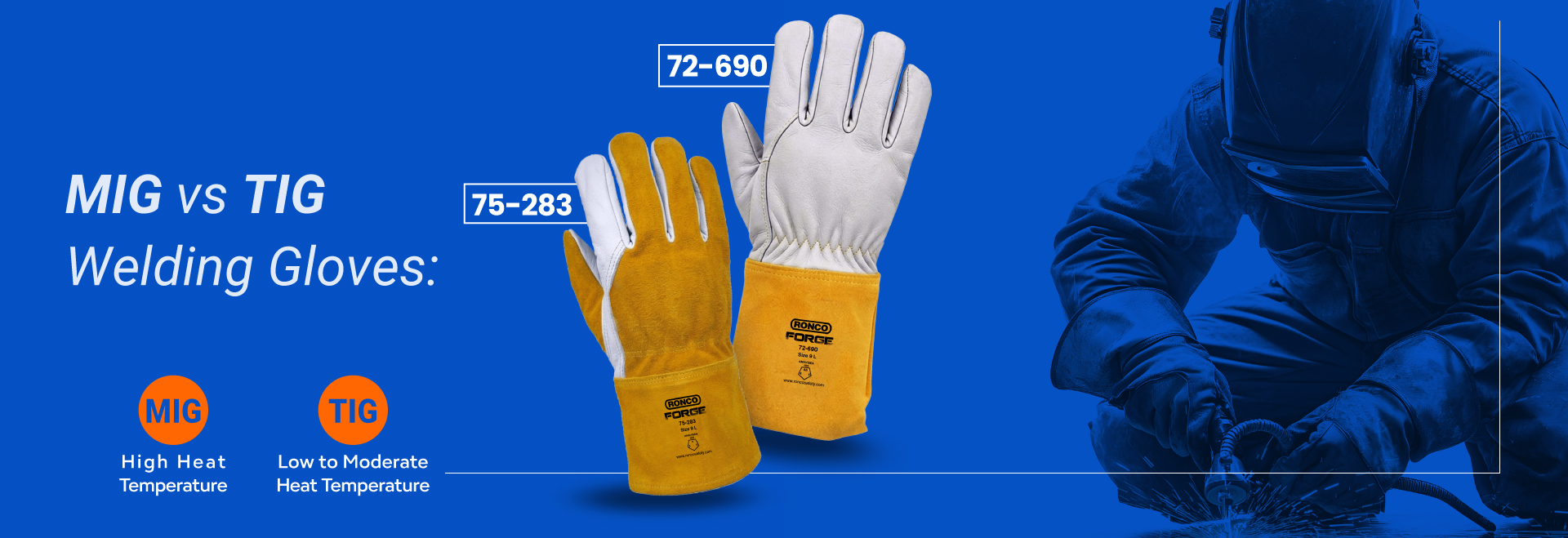
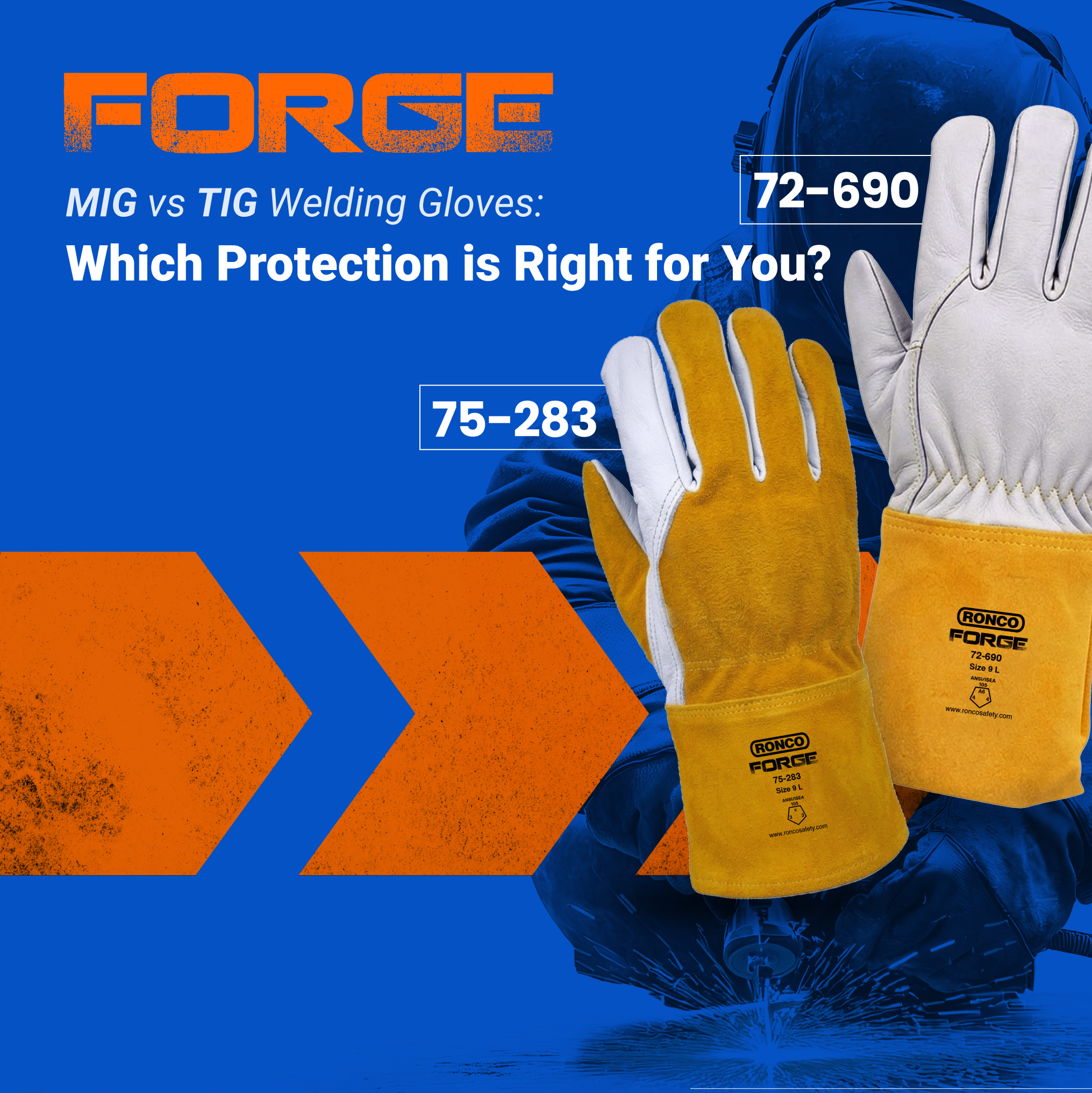
MIG vs TIG Welding Gloves: How to Choose the Right Protection
Comparing MIG vs. TIG welding gloves is important because each welding process requires a different balance of heat protection, dexterity, durability, and comfort.
In welding environments, gloves are more than just hand protection. They directly impact safety, precision, productivity, and long-term comfort. Whether a welder is working on structural steel fabrication, automotive repair, pipe welding, or precision TIG applications, selecting the correct glove for the process is critical.
MIG and TIG welding create very different working conditions. Heat exposure, dexterity requirements, spark generation, and handling hazards all vary significantly between applications. Using the wrong glove can reduce control, increase fatigue, and expose workers to unnecessary risks.
Understanding the Difference Between MIG and TIG Welding
MIG, or Metal Inert Gas welding, is generally faster and produces higher heat, more sparks, and greater spatter. Welders performing MIG welding often require gloves with heavier insulation, reinforced wear zones, and enhanced heat resistance. Durability becomes especially important in industries such as metal fabrication, shipbuilding, construction, and oil and gas.
TIG, or Tungsten Inert Gas welding, prioritizes precision and control. TIG welders need superior fingertip sensitivity and dexterity to manage filler rods and maintain weld accuracy. Gloves for TIG applications are typically lighter and more flexible while still providing adequate protection from heat and sharp materials.
Many modern fabrication environments also require versatile gloves capable of supporting both MIG and TIG applications, particularly when workers transition between grinding, fitting, fabrication, and welding tasks throughout the day.
Key Features That Matter in Welding Gloves
When evaluating welding gloves, there are several performance factors professionals should consider:
• Heat resistance for prolonged exposure to sparks and hot materials.
• Dexterity and trigger control for accurate welding performance.
• Cut resistance when handling sharp metal edges.
• Reinforced palm and thumb areas for durability.
• Comfortable linings that reduce fatigue during long shifts.
• Extended cuffs for forearm and wrist protection.
• Strong seam construction capable of withstanding demanding environments.
The ideal glove balances protection, dexterity, and flexibility without compromising productivity.
MIG vs TIG Welding Gloves Comparison
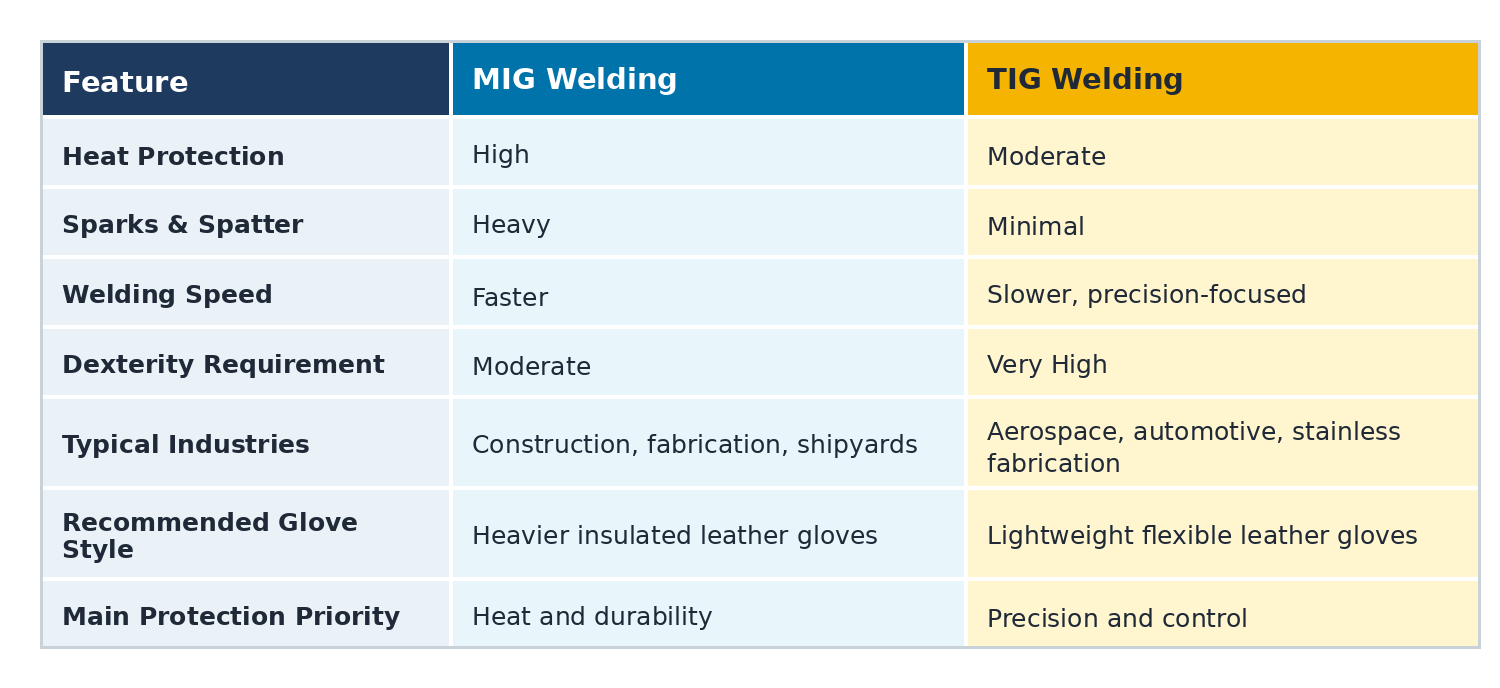
MIG Welding Gloves: Built for Heat and Durability
For demanding MIG welding applications, heavier leather gloves with reinforced construction are often preferred.
A strong example is the FORGE™ 75-283 from RONCO Safety. Designed with premium grain and split cowhide leather, this glove combines durability with flexibility for industrial welding environments.
What makes this style particularly effective for MIG welding is the seamless forefinger design, which improves trigger control while reducing pressure points during repetitive welding tasks. Reinforced split cowhide on high-wear areas extends glove life, while the cotton fleece lining adds heat protection without excessive bulk.
Applications such as metal fabrication shops, shipyards, mining operations, construction sites, and oil pipeline work often demand this balance of rugged protection and all-day comfort.
Hybrid MIG/TIG Gloves for Multi-Task Environments
Modern industrial workplaces increasingly require versatile gloves that can transition across multiple tasks. Fabricators may move from welding to grinding, fitting, material handling, and assembly within the same shift.
The FORGE™ 75-363 addresses this need by combining welding protection with advanced impact resistance and cut protection. Constructed with premium goatskin leather and a para-aramid liner, the glove delivers ANSI/ISEA 105 Cut Level A4 protection while maintaining flexibility and comfort.
One standout feature is its non-flammable TPR back-of-hand protection, specifically engineered for welding environments where traditional impact materials may melt or ignite. Combined with vibration-reducing padded palms and oil and water resistance treatment, the glove becomes highly suitable for fabrication shops, heavy maintenance operations, grinding applications, and industrial welding environments where workers encounter multiple hazards simultaneously.
This type of hybrid glove reflects a growing trend in PPE: multifunctional protection without sacrificing dexterity.
TIG Welding Gloves: Precision Without Compromise
TIG welding demands maximum hand control and tactile sensitivity. Gloves that are too bulky can negatively affect weld quality and operator precision.
The FORGE™ 72-690 is engineered specifically for these high-precision environments. Built with premium goatskin grain leather and a para-aramid liner, this glove delivers ANSI/ISEA 105 Cut Level A6 protection while maintaining excellent dexterity and comfort.
The gunn cut pattern enhances natural hand movement, while the gauntlet cuff provides extended wrist and forearm coverage. This combination makes the glove suitable not only for TIG welding, but also for smelting operations, heavy fabrication, and environments where workers handle sharp metal components.
As welding operations evolve, there is increasing demand for gloves that provide both high cut resistance and fine motor control, especially in industries handling stainless steel, sheet metal, and precision fabrication work.
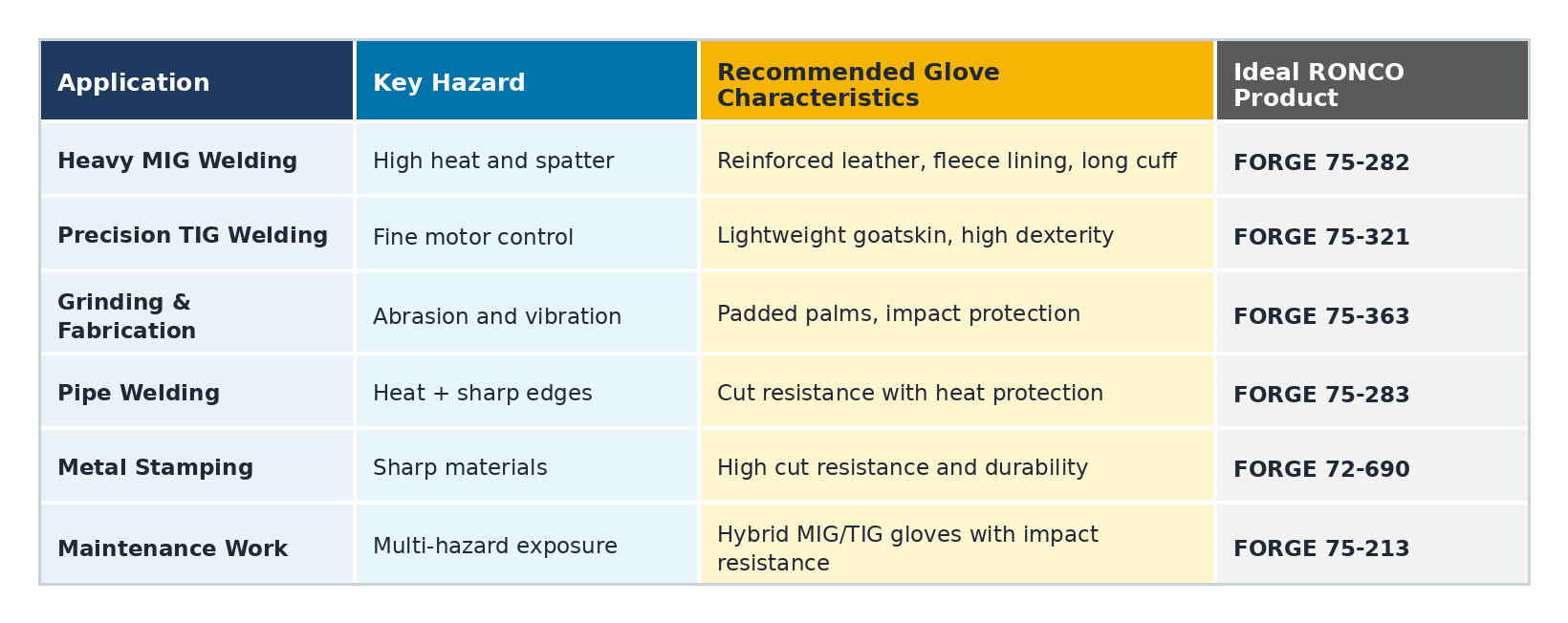
Welding Glove Selection by Application
 The Bottom Line
No single welding glove is ideal for every welding application. MIG welding typically requires enhanced heat resistance and durability, while TIG welding prioritizes dexterity and precision. In many industrial environments, workers also need hybrid protection that supports multiple tasks and hazards throughout the workday.
Selecting gloves based on the specific welding process, environmental hazards, and worker demands can significantly improve both safety and operational efficiency. High-performance welding gloves are no longer just basic PPE. They are productivity tools that help welders work safer, longer, and more effectively in challenging industrial conditions.
SIGN UP FOR OUR
NEWSLETTER
Learn how to choose industrial hearing protection and explore RONCO HUSH™ earplugs, metal detectable options & high visibility safety earmuffs

Learn the most common hearing protection mistakes workers make and how proper hearing protection can help reduce workplace noise exposure.
Compare MIG and TIG welding gloves by heat, dexterity and protection. Find the right RONCO welding glove for each application.